
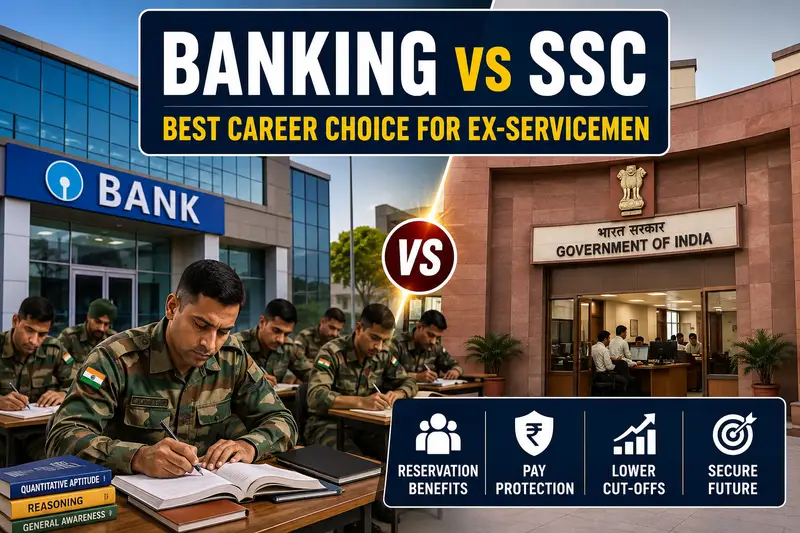
Retirement from the Armed Forces is not the end of a professional journey. For many ex-servicemen, it is the beginning of a new career in the civilian sector. Among the most popular options are government banking jobs and recruitment through the Staff Selection Commission Combined Graduate Level (SSC CGL) examination. Both offer stable employment, attractive salaries, and long-term career growth. However, deciding between the two can be challenging because each career path has its own advantages, work environment, and eligibility conditions. Ex-servicemen should carefully evaluate their qualifications, interests, age, and long-term career goals before making a decision. Understanding the differences between banking and SSC CGL jobs can help veterans choose the option that best matches their experience and future plans.
Banking Jobs Offer Stability and Customer-Focused Work
Banking jobs remain one of the most preferred career choices for ex-servicemen because they provide job security, structured promotions, and opportunities to work in different parts of the country. Public sector banks value the discipline, leadership, and responsibility that veterans bring from their military service. Employees generally work in customer service, administration, finance, cash management, or loan processing. The work environment is professional and performance-oriented, with fixed office hours in most cases. Banking jobs also provide opportunities for internal promotions and skill development. However, candidates should be prepared to handle customer interactions, financial responsibilities, and performance targets in certain positions. Those who enjoy communication, office work, and dealing with people may find banking a rewarding career option.
SSC CGL Opens the Door to Multiple Government Departments
The SSC Combined Graduate Level examination offers recruitment to several Central Government ministries, departments, and organizations. Successful candidates can be appointed to administrative, audit, taxation, investigation, accounts, or clerical positions depending on their rank and preference. For ex-servicemen, SSC CGL provides an opportunity to continue serving in government organizations while benefiting from pay, allowances, pension-related provisions, and career progression.
| Feature | Banking Jobs | SSC CGL Jobs |
|---|---|---|
| Employer | Public Sector Banks | Central Government Departments |
| Nature of Work | Customer service and banking operations | Administrative and departmental work |
| Transfers | Possible across branches | Depends on department and posting |
| Career Growth | Internal promotions | Departmental promotions |
| Work Environment | Office with customer interaction | Government office environment |
Before choosing either option, ex-servicemen should consider:
- Educational qualifications required.
- Age eligibility and relaxation rules.
- Personal interest in the nature of work.
- Future promotion opportunities.
- Preferred place of posting and transfers.
Salary, Benefits and Career Growth Compared
Both banking and SSC CGL jobs offer competitive salaries along with various allowances and government benefits. Public sector bank employees receive benefits such as medical facilities, leave, and opportunities for promotion based on performance and experience. SSC CGL employees enjoy Central Government pay scales, dearness allowance, leave benefits, and structured promotional avenues depending on the department. In terms of work-life balance, the experience may vary according to the specific post and location. Some banking roles involve customer-facing responsibilities and periodic transfers, while many SSC CGL posts are more office-based with departmental administrative responsibilities. Candidates should compare not only the starting salary but also long-term career prospects before making a final choice.
Which Option Is Better for Ex-Servicemen?
There is no single answer because the best option depends on individual priorities. Ex-servicemen who enjoy interacting with people, handling financial matters, and working in a dynamic office environment may prefer banking. On the other hand, those looking for administrative responsibilities, departmental work, and broader opportunities within Central Government organizations may find SSC CGL more suitable. Veterans should also consider their educational background, computer skills, communication ability, and willingness to relocate before applying. Preparing for competitive examinations in advance and understanding the recruitment process can improve the chances of success in either field.
Make an Informed Career Decision
Both banking and SSC CGL provide excellent career opportunities for ex-servicemen seeking stable employment after military service. Each option offers respectable pay, government benefits, career growth, and the chance to continue contributing to the nation’s development in a civilian role. Instead of focusing only on salary, veterans should evaluate the work profile, promotion opportunities, job satisfaction, and personal career goals. A well-informed decision can lead to a successful and rewarding second career. With proper preparation, the right qualifications, and a clear understanding of each option, ex-servicemen can confidently choose the career path that best fits their future aspirations.
FAQs
1. Which is better for ex-servicemen, Banking or SSC CGL?
Both offer good career opportunities. The better choice depends on your qualifications, interests, preferred work environment, and long-term career goals.
2. Do ex-servicemen get reservation benefits in SSC CGL?
Eligible ex-servicemen may receive reservation and age relaxation benefits according to the applicable Government recruitment rules and the official notification.
3. Are banking jobs suitable for retired Armed Forces personnel?
Yes. Public sector banks often value the discipline, leadership, and work ethic of ex-servicemen, making banking a popular career option after retirement.