
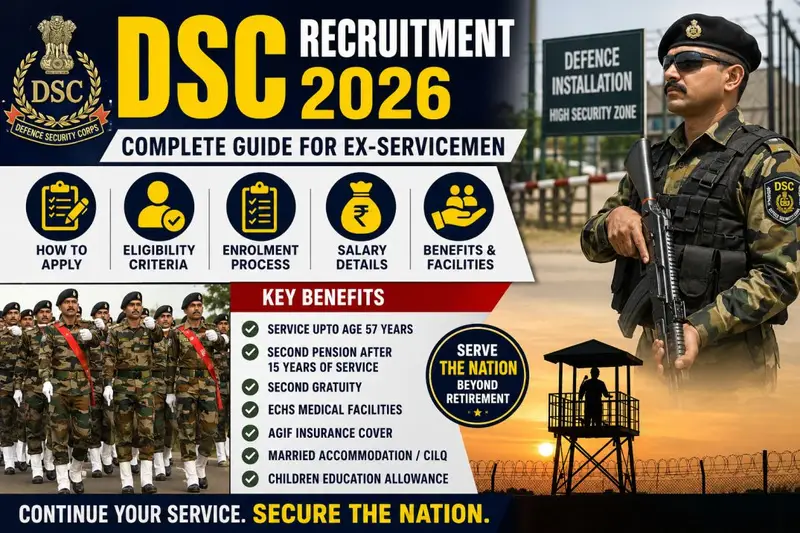
For thousands of retired soldiers across India, the Defence Security Corps (DSC) remains one of the best opportunities to continue serving the nation after retirement from the Army. Every year, eligible ex-servicemen eagerly wait for DSC enrolment notifications because the organisation offers stable employment, military discipline, and the pride of wearing the uniform once again. The Defence Security Corps is responsible for guarding important military establishments such as ammunition depots, military stations, workshops, communication centres, training institutions, and other strategic defence assets. Since the force recruits only eligible ex-servicemen, the selection process is different from regular Army recruitment. Candidates who meet the prescribed conditions can apply through the authorised recruitment process and continue their second innings in military service while enjoying salary and other service benefits.
Eligibility Criteria and Enrolment Process Explained
The first step towards joining the Defence Security Corps is meeting the eligibility conditions laid down by the authorities. Only ex-servicemen of the Indian Armed Forces are eligible to apply. Applicants must satisfy the prescribed age limit, medical fitness standards, character requirements, and other service-related conditions applicable at the time of recruitment. After the recruitment notification is released, eligible candidates are required to report to the designated DSC Recruitment Centre with all original documents. The enrolment process generally includes document verification, medical examination, physical fitness assessment, and final screening. Only candidates who successfully complete every stage of the selection process are enrolled into the Defence Security Corps.
| Eligibility Criteria | Details |
|---|---|
| Eligible Candidates | Ex-servicemen of the Indian Armed Forces |
| Medical Fitness | Mandatory |
| Character Verification | Required |
| Physical Assessment | Compulsory |
| Final Enrolment | After successful completion of all stages |
How to Apply and Documents Required
Unlike many government recruitments that are conducted completely online, DSC enrolment generally follows an offline reporting process based on official recruitment notifications. Interested candidates should carefully read the latest enrolment instructions issued by their respective Army Record Office or authorised military authorities. Before reporting to the recruitment centre, applicants should prepare all necessary documents to avoid delays during verification. These normally include the discharge book, pension payment order or relevant pension documents, service certificate, Aadhaar or other valid identity proof, passport-size photographs, medical records, and any additional certificates mentioned in the recruitment instructions. Candidates should also ensure that all documents are updated and in good condition before appearing for enrolment.
| Documents Required | Purpose |
|---|---|
| Discharge Book | Service verification |
| Identity Proof | Personal identification |
| Passport-size Photographs | Recruitment records |
| Medical Documents | Health verification |
| Pension/Service Documents | Eligibility confirmation |
Salary, Benefits and Second Pension Rules
One of the biggest attractions of joining the Defence Security Corps is the opportunity to receive a regular salary while continuing military service after retirement. DSC personnel are paid according to the applicable government pay structure and receive allowances as permitted under service rules. Depending on entitlement, personnel may also receive accommodation, leave benefits, medical facilities, canteen facilities, and other authorised welfare benefits. Another topic that frequently interests ex-servicemen is the possibility of receiving a second pension after DSC service. It is important to understand that a second pension is not automatically granted to every individual. Eligibility depends on the qualifying service completed in the DSC and the pension regulations applicable at the time of discharge. Therefore, candidates should understand the applicable rules before making long-term financial plans.
| Service Benefits | Details |
|---|---|
| Regular Salary | Yes |
| Medical Facilities | As per applicable rules |
| Leave Benefits | Available |
| Canteen Facilities | As per entitlement |
| Second Pension | Subject to qualifying service and pension regulations |
Why DSC Continues to Be a Preferred Career After Retirement
For many veterans, joining the Defence Security Corps is not just about earning another salary. It is about continuing a life of discipline, responsibility, and national service. The experience gained during military service allows ex-servicemen to perform security duties efficiently while remaining part of the defence environment. DSC also offers an organised work culture that many retired soldiers find familiar and rewarding. Candidates planning to apply should maintain good physical fitness, keep all documents updated, regularly check official recruitment notifications, and report on the scheduled dates without delay. Careful preparation and timely reporting can significantly improve the chances of successful enrolment. As interest in DSC recruitment continues to grow, staying informed about the latest eligibility conditions and recruitment procedures remains essential for every aspiring candidate.
FAQs
1. Who is eligible to apply for DSC Recruitment 2026?
Only eligible ex-servicemen of the Indian Armed Forces who satisfy the prescribed age, medical, character, and service conditions can apply for DSC enrolment.
2. Is the DSC recruitment process conducted online?
Generally, DSC recruitment follows the enrolment procedure notified by authorised military authorities. Candidates usually report to designated recruitment centres for document verification, medical examination, physical assessment, and other selection formalities.
3. Will every DSC employee receive a second pension?
No. A second pension is not automatic. It depends on the qualifying service completed in the Defence Security Corps and the pension rules applicable to the individual at the time of discharge.