
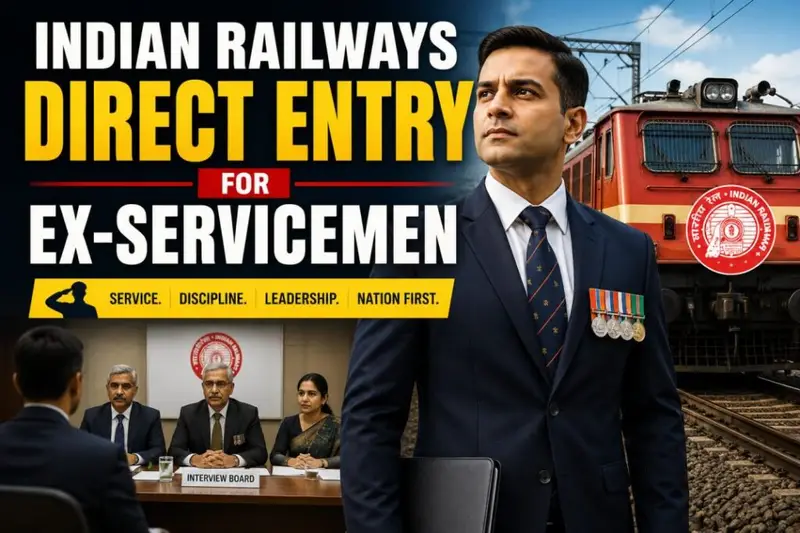
Indian Railways has once again offered employment opportunities to ex-servicemen by allowing them to join as Gatemen at railway level crossings. For many retired soldiers, this provides a stable government job after completing years of military service. Since most soldiers retire in their 30s or 40s, they still have many productive working years ahead. A second career helps them support their families while continuing to serve the country in a different role. At the same time, the move has started an important discussion among veterans and defence experts. While many appreciate the employment opportunity, others believe that highly trained military personnel deserve positions that make better use of their leadership, technical skills, and years of disciplined service.
Why Ex-Servicemen Are Preferred for Gateman Posts
Indian Railways values ex-servicemen because they are known for discipline, punctuality, responsibility, and the ability to work under pressure. A Gateman plays a critical role in ensuring railway safety by operating level crossings, monitoring train movement, and preventing accidents involving vehicles and pedestrians. These duties require alertness and commitment, qualities that military veterans naturally possess after years of service. The experience gained in the armed forces also helps them follow safety procedures without compromise. For many veterans, especially those living in rural areas, a Gateman job offers financial stability, government benefits, and the chance to remain active after retirement.
A Bigger Question: Are Veterans Being Fully Utilised?
Although the recruitment provides employment, many retired defence personnel feel that it does not fully recognise the skills they developed during military service. Soldiers receive extensive training in leadership, logistics, communication, engineering support, administration, disaster response, and security management. Many veterans believe these abilities could be better used in supervisory, technical, or administrative roles instead of positions with limited career growth. Experts have also pointed out that India invests heavily in training its soldiers, and using their experience in higher-responsibility roles could benefit both government departments and public sector organisations. The debate is therefore not about rejecting Gateman jobs but about creating more diverse opportunities that match veterans’ qualifications and experience.
| Specification | Details |
|---|---|
| Recruiting Organisation | Indian Railways |
| Eligible Candidates | Ex-Servicemen |
| Post Offered | Gateman |
| Nature of Employment | Government Service |
| Main Responsibility | Railway Level Crossing Safety |
| Key Strength of Veterans | Discipline, Safety Awareness, Responsibility |
Why Many Veterans Still Welcome These Jobs
Despite the debate, thousands of ex-servicemen continue to apply for such vacancies every year. After retiring at a relatively young age, many veterans need immediate employment to meet household expenses, children’s education, healthcare costs, and financial commitments. Not every retired soldier has technical qualifications required for specialised civilian jobs, making government recruitment an important source of income. Railway jobs also provide job security, fixed working hours, retirement benefits, and a respected position in society. For many families, this second career offers peace of mind and financial stability. Therefore, while the role may not fully utilise military expertise, it remains a valuable employment option for a large number of veterans.
Need for Better Career Planning for Ex-Servicemen
The discussion surrounding Gateman recruitment has highlighted the need for stronger resettlement policies for retired armed forces personnel. Defence experts believe that India should create more opportunities in sectors such as security management, infrastructure, disaster management, public administration, transport, and technical services, where military experience can be fully utilised. Skill development programmes, bridge training, and industry partnerships can also help veterans transition into better-paying and higher-responsibility civilian careers. At the same time, existing opportunities like Gateman recruitment should continue for those who prefer stable government employment. A balanced approach can ensure that every veteran finds meaningful work based on his skills, experience, and personal needs after retirement.
Key Highlights
- Indian Railways offers Gateman jobs to eligible ex-servicemen.
- The role provides stable government employment after military retirement.
- Veterans are valued for their discipline, alertness, and commitment to safety.
- Some experts believe military skills should be utilised in higher-level positions.
- Better resettlement policies can create wider career opportunities for retired soldiers.
- The recruitment continues to provide financial security for many veteran families.
FAQs
1. Who can apply for Gateman posts under this recruitment?
Eligible ex-servicemen who meet the prescribed conditions announced by the recruiting authority can apply for these posts.
2. Why does Indian Railways recruit ex-servicemen as Gatemen?
Ex-servicemen are known for discipline, responsibility, and safety awareness, making them suitable for duties related to railway level crossing operations.
3. Why is there a debate about these jobs?
Many veterans appreciate the employment opportunity, while others believe their military training and leadership skills could be better utilised in higher-responsibility government and public sector roles.