
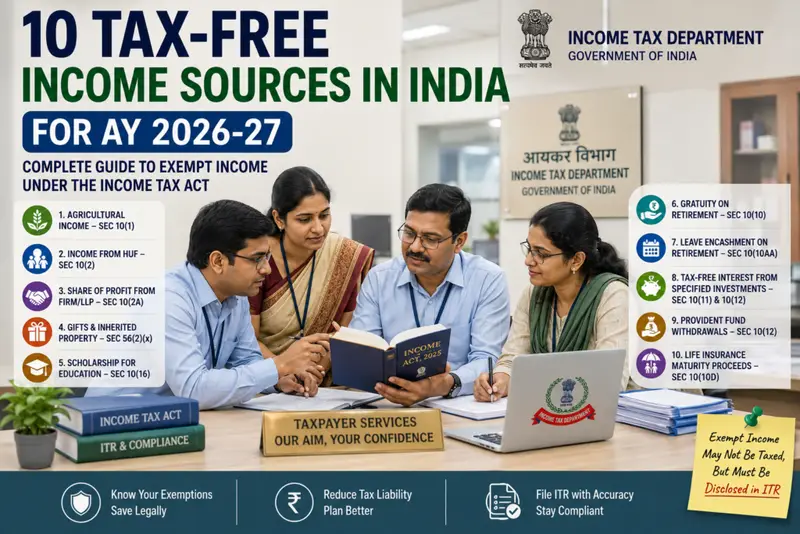
Every taxpayer wants to reduce their tax burden legally, and one of the best ways to do that is by understanding tax-free income. Under the Income Tax Act, certain types of income are either fully exempt or exempt subject to prescribed conditions. Knowing these exemptions can help salaried employees, pensioners, business owners, and retired individuals plan their finances more effectively. As taxpayers prepare for filing Income Tax Returns for Assessment Year (AY) 2026-27, it is important to understand which income sources may not attract income tax. However, exemptions depend on the applicable provisions of the Income Tax Act and may vary based on individual circumstances. Therefore, taxpayers should always verify the eligibility conditions before claiming any exemption.
Why Tax-Exempt Income Matters
Tax-exempt income not only reduces your overall tax liability but also helps in better financial planning. Many taxpayers focus only on deductions under various sections of the Income Tax Act, while exempt income is often overlooked. In some cases, exempt income may still need to be disclosed in the Income Tax Return even though no tax is payable on it. Proper reporting ensures transparency and helps avoid future notices or queries from the tax department. Understanding these provisions also enables individuals to make informed investment and financial decisions without violating tax laws.
10 Common Tax-Free Income Sources in India
Several categories of income enjoy tax exemption under the Income Tax Act, subject to the applicable rules and conditions. Taxpayers should understand these exemptions carefully before filing their returns.
| Income Source | General Tax Status |
|---|---|
| Agricultural Income | Exempt subject to applicable provisions |
| Certain Provident Fund Withdrawals | Exempt if prescribed conditions are fulfilled |
| Gratuity | Exempt up to the applicable limits and conditions |
| Leave Encashment | Exempt in eligible cases as per rules |
| Life Insurance Maturity Amount | Exempt where prescribed conditions are satisfied |
| Scholarship for Education | Generally exempt |
| Gifts Received in Specified Situations | Exempt under eligible conditions |
| Certain Retirement Benefits | Exempt as provided under tax laws |
| Compensation Received in Certain Cases | Exempt where applicable |
| Specified Government-Notified Exemptions | As provided under the Income Tax Act |
Taxpayers should also remember these important points:
- Read the eligibility conditions before claiming any exemption.
- Maintain supporting documents for exempt income.
- Report exempt income correctly in the Income Tax Return wherever required.
- Keep records of investments and receipts safely.
- Consult a tax professional if there is any uncertainty regarding eligibility.
Things Taxpayers Should Keep in Mind
Although these income sources are commonly referred to as tax-free, many of them are exempt only when specific conditions are fulfilled. For example, certain retirement benefits have prescribed exemption limits, while some insurance proceeds qualify only if policy conditions meet the requirements under the Income Tax Act. Similarly, provident fund withdrawals and other benefits may lose exemption if the applicable rules are not satisfied. Therefore, taxpayers should avoid assuming that every payment received under these categories is automatically exempt. Reviewing the relevant provisions before filing the return can prevent errors and future tax disputes.
Smart Tax Planning Is Better Than Last-Minute Decisions
Good tax planning begins at the start of the financial year rather than just before filing the Income Tax Return. Keeping proper records, understanding exempt income provisions, and staying informed about the latest tax rules can help taxpayers avoid mistakes. Salaried employees should carefully review Form 16, pensioners should maintain pension-related documents, and investors should preserve records of all financial transactions. Proper documentation makes return filing easier and provides support if any clarification is required later. Taxpayers should also avoid relying on social media messages or unverified advice and instead use authentic information while planning their taxes.
Stay Informed and File Your Return Correctly
The Income Tax Act provides several opportunities for taxpayers to reduce their tax liability through legally available exemptions. Understanding tax-free income sources is an important part of financial planning and can help individuals manage their finances more efficiently. However, every exemption comes with its own conditions, limits, and documentation requirements. As taxpayers prepare for AY 2026-27, they should carefully review all eligible exemptions and ensure that exempt income is reported correctly wherever required. A well-informed approach not only helps save tax but also ensures smooth and accurate Income Tax Return filing without unnecessary complications.
FAQs
1. Is all agricultural income completely tax-free?
Agricultural income is generally exempt under the Income Tax Act, but its treatment may vary in certain situations, especially for rate calculation purposes. Taxpayers should check the applicable provisions.
2. Do I need to mention exempt income while filing my Income Tax Return?
Yes. Certain categories of exempt income may still need to be disclosed in the Income Tax Return, even though they are not taxable.
3. Can every life insurance maturity amount be claimed as tax-free?
No. The exemption depends on whether the policy satisfies the conditions prescribed under the Income Tax Act. Taxpayers should verify the applicable rules before claiming the exemption.