
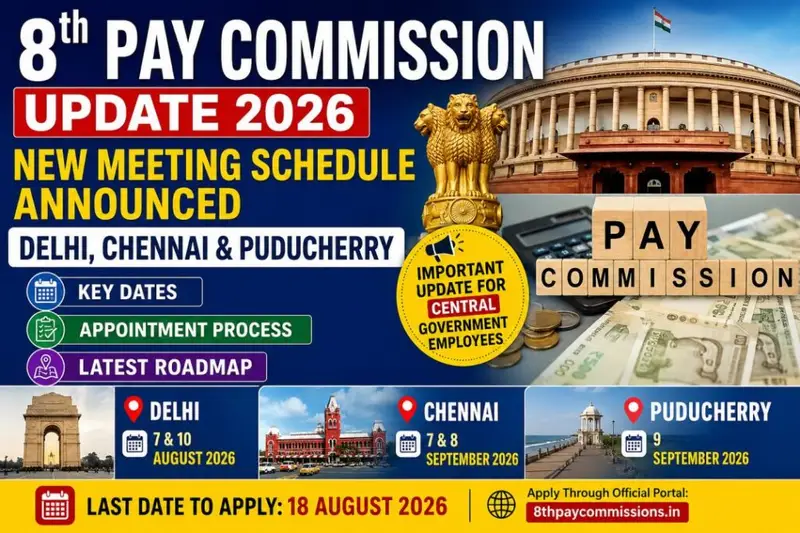
The 8th Pay Commission has entered an important phase as fresh meeting schedules have been announced for consultations in Delhi, Chennai, and Puducherry. These meetings are expected to play a key role in gathering suggestions from Central Government employees, pensioners, staff associations, and various stakeholders before preparing the Commission’s final recommendations. Employees across different departments are closely following these developments because the 8th Pay Commission is expected to recommend changes in salary structures, pensions, allowances, and other service-related benefits. The newly announced roadmap shows that the Commission is moving ahead with a structured consultation process to ensure that all important issues are discussed before submitting its report to the Government.
Delhi, Chennai and Puducherry Meetings: What Will Be Discussed?
The upcoming meetings have been planned to interact with employee representatives and collect feedback on pay revision, pension improvements, career progression, allowances, and service conditions. Stakeholders from different ministries and employee organizations are expected to present their views and suggestions. These consultations are considered an important step because they allow the Commission to understand the practical concerns of employees working in different regions and departments. After reviewing these suggestions, the Commission will continue preparing its recommendations for the Government.
Meeting Schedule Overview
| Particular | Details |
|---|---|
| Commission | 8th Central Pay Commission |
| Meeting Locations | Delhi, Chennai & Puducherry |
| Purpose | Consultation with stakeholders |
| Participants | Employee Associations, Pensioners and Government Representatives |
| Main Focus | Salary, Pension, Allowances and Service Conditions |
Appointment Process and Stakeholder Participation
The consultation process is expected to follow a structured appointment system. Employee associations, pensioner organizations, and recognized bodies may be invited according to the Commission’s approved schedule. During these meetings, representatives can submit written memorandums, explain their demands, and discuss issues related to pay revision, pension benefits, allowances, promotional opportunities, and other service matters. Proper documentation and advance scheduling help ensure that every stakeholder gets an opportunity to present their views in an organized manner. These interactions are an essential part of the Commission’s fact-finding exercise before preparing its final recommendations.
Consultation Process
| Stage | Purpose |
|---|---|
| Meeting Invitation | Stakeholder Participation |
| Appointment Scheduling | Organized Consultation |
| Memorandum Submission | Presentation of Demands |
| Discussion Session | Clarification of Issues |
| Review by Commission | Preparation of Recommendations |
Latest Roadmap for the 8th Pay Commission
The Commission is expected to continue consultations in different regions before analyzing all the suggestions received from employees, pensioners, and government departments. Once the consultation phase is completed, the Commission will examine financial implications, compare existing pay structures, and prepare recommendations for the Government. The final report is expected to cover revisions in basic pay, pension, allowances, and other employment-related benefits. Although employees are eagerly waiting for the recommendations, it is important to remember that any changes will become effective only after the Government reviews and officially approves the Commission’s report. Until then, all discussions remain part of the consultation and recommendation process.
Why These Meetings Matter for Employees and Pensioners
The announcement of fresh meeting schedules is an encouraging development because it confirms that the Commission is actively moving forward with its work. For Central Government employees and pensioners, these meetings provide an opportunity for their concerns to be heard through recognized associations. Issues such as minimum pay, fitment factor, pension revision, medical facilities, and career progression are expected to remain key discussion points. While no final decision on revised salaries or pensions has been announced yet, the consultation process is an important milestone. Employees and pensioners should continue following official updates and avoid relying on unofficial claims or speculative reports until the Commission submits its recommendations and the Government issues formal approval.
FAQs
1. Why are the Delhi, Chennai and Puducherry meetings important?
These meetings allow the 8th Pay Commission to gather suggestions and feedback from employee associations, pensioners, and other stakeholders before preparing its final recommendations.
2. Will salaries increase immediately after these meetings?
No. The meetings are part of the consultation process. Any revision in salary or pension will take place only after the Commission submits its recommendations and the Government officially approves them.
3. Who can participate in the consultation meetings?
Participation is generally through recognized employee associations, pensioner organizations, government departments, and other stakeholders invited according to the Commission’s consultation schedule.