
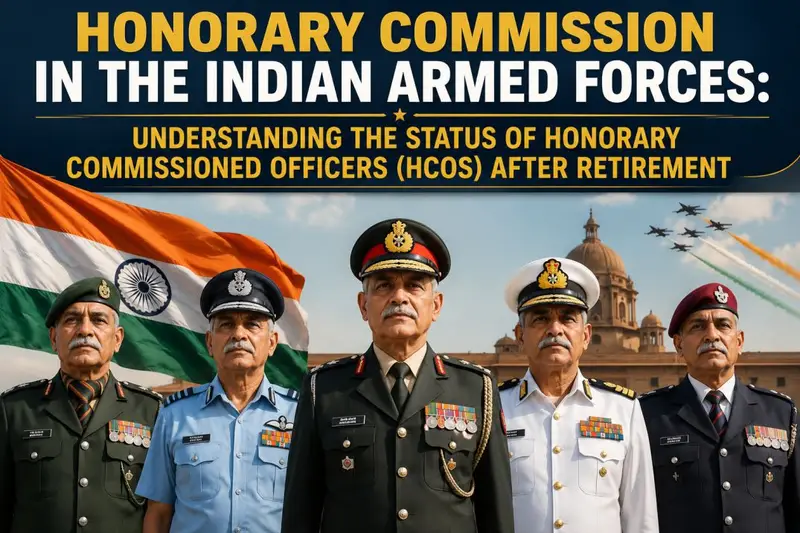
The Honorary Commission is one of the highest recognitions that can be awarded to deserving Junior Commissioned Officers (JCOs) in the Indian Armed Forces. It is a mark of respect for long, dedicated, and distinguished service to the nation. Every year, selected personnel from the Army are granted honorary ranks such as Honorary Lieutenant or Honorary Captain, usually on important national occasions or before retirement. While these honorary ranks bring prestige and recognition, many people are unsure about the status, privileges, and position of Honorary Commissioned Officers (HCOs) after retirement. Understanding how the honorary commission works can help serving personnel, veterans, and their families better appreciate its significance.
What Is an Honorary Commission?
An Honorary Commission is a ceremonial rank awarded to eligible Junior Commissioned Officers who have demonstrated outstanding service, discipline, leadership, and commitment during their military careers. It is not a regular promotion through the normal officer selection process but a special honour granted by the President of India.
The honorary rank recognizes the contribution of experienced soldiers who have served the country with dedication over many years. Although it carries great prestige, it does not automatically place the recipient in the same category as officers who were commissioned through regular military academies.
Receiving an honorary commission is considered one of the most respected achievements for retiring JCOs, reflecting both professional excellence and exemplary service.
Status of Honorary Commissioned Officers After Retirement
After retirement, Honorary Commissioned Officers continue to hold their honorary rank and are generally addressed by that rank in official and ceremonial settings. The honorary title becomes an important part of their identity and reflects the recognition they received during military service.
However, the honorary commission does not usually change the basic nature of retirement or create a fresh service tenure. The officer remains retired and does not automatically receive active military responsibilities because of the honorary rank.
The honorary status mainly represents recognition and dignity rather than a return to active service. Any pensionary or financial benefits associated with the honorary commission depend on the applicable government rules and regulations in force at the time of retirement.
Key Features of an Honorary Commission
The honorary commission provides several important recognitions while maintaining clear distinctions from regular commissioned service. The following table summarizes its main features.
| Feature | Details |
|---|---|
| Purpose | Recognition of distinguished military service |
| Eligible Personnel | Selected Junior Commissioned Officers (JCOs) |
| Awarding Authority | President of India |
| Common Honorary Ranks | Honorary Lieutenant, Honorary Captain |
| Nature of Rank | Ceremonial and honorary recognition |
| Status After Retirement | Honorary rank continues to be held |
| Active Service | Does not automatically continue after retirement |
The honorary commission highlights years of dedicated service and recognizes individuals who have maintained high professional standards throughout their military careers.
Why Honorary Commissions Are Highly Respected
The Indian Armed Forces place great importance on honour, discipline, and service to the nation. An honorary commission reflects these values by recognizing personnel who have consistently demonstrated leadership, integrity, and devotion to duty.
For many soldiers, receiving an honorary commission is one of the proudest moments of their career. It acknowledges decades of commitment and serves as an inspiration for younger personnel. Families of Honorary Commissioned Officers also take immense pride in this recognition, as it reflects the sacrifices made throughout the years of military service.
Some of the key reasons honorary commissions are highly valued include:
- Recognition of long and distinguished service
- National honour awarded by the President of India
- Continued use of the honorary rank after retirement
- Respect within the military community
- Inspiration for serving soldiers
- Symbol of leadership and professional excellence
The honorary rank becomes a lasting reminder of the officer’s contribution to the Armed Forces and the nation.
A Lasting Symbol of Service and Dedication
Honorary Commissions continue to represent one of the most respected traditions in the Indian Armed Forces. Although they do not convert honorary officers into regular commissioned officers after retirement, they recognize exceptional dedication, discipline, and years of loyal service.
For retired Honorary Commissioned Officers, the honorary rank remains a lifelong symbol of achievement and respect. It reflects the appreciation of the nation for their commitment and sacrifice while preserving the proud traditions of the Armed Forces. As India continues to honour its veterans, the institution of honorary commissions remains an important way of recognizing those who have served the country with distinction and unwavering dedication.
FAQs
1. What is an Honorary Commission in the Indian Armed Forces?
An Honorary Commission is a ceremonial rank awarded to selected Junior Commissioned Officers in recognition of their distinguished and dedicated military service.
2. Do Honorary Commissioned Officers remain officers after retirement?
Honorary Commissioned Officers continue to hold and use their honorary rank after retirement for official and ceremonial purposes, but they do not automatically continue in active military service.
3. Does an Honorary Commission guarantee additional pension benefits?
Pension or financial benefits related to an Honorary Commission depend on the applicable government rules and regulations. The honorary rank itself is primarily a recognition of distinguished service.