
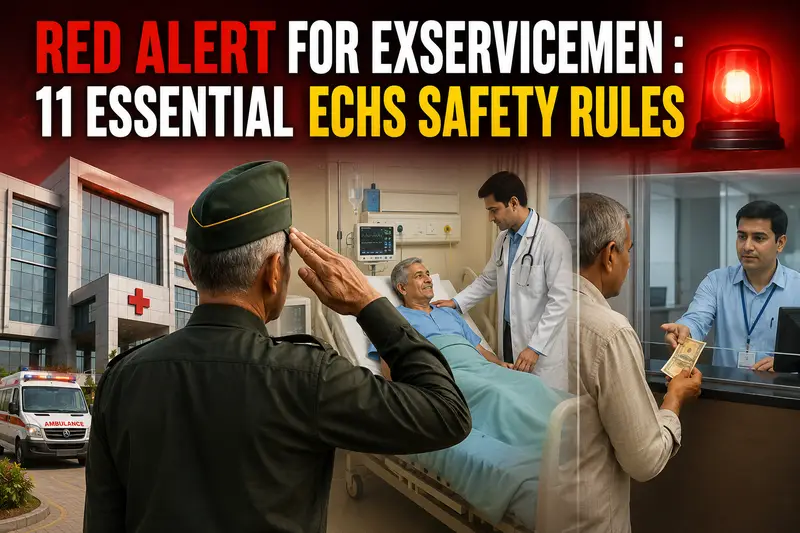
The Ex-Servicemen Contributory Health Scheme (ECHS) has become one of the most important healthcare support systems for retired Armed Forces personnel and their families. Every day, thousands of veterans visit ECHS Polyclinics and empanelled hospitals for consultations, surgeries, and specialized treatment. While the scheme offers quality medical care, beneficiaries must also understand that following the correct procedures is equally important. A small mistake, such as not carrying the required documents or failing to obtain proper referrals, can result in delays, additional expenses, or even rejection of claims. That is why veterans should stay informed and follow all ECHS guidelines carefully whenever they require hospital treatment.
Importance of Following ECHS Procedures
Many ex-servicemen assume that once they possess a valid ECHS card, every treatment will automatically be cashless. In reality, certain procedures require prior approval, referrals, or verification before admission. Hospitals and ECHS authorities also verify beneficiary details to ensure that treatment is provided according to the scheme’s rules. Understanding these procedures helps avoid unnecessary stress during medical emergencies. Family members should also be familiar with the process because they often handle paperwork when the patient is admitted. Keeping medical records updated and maintaining communication with the ECHS Polyclinic can make the entire treatment process much smoother.
11 Essential ECHS Safety Rules Every Veteran Should Follow
Following these important safety rules can help ensure a smooth treatment experience and reduce the chances of administrative problems during hospitalization.
| Safety Rule | Why It Matters |
|---|---|
| Carry your valid ECHS Card | Required for identity verification |
| Keep Aadhaar and ID proof ready | Helps complete beneficiary verification |
| Visit the ECHS Polyclinic when required | Necessary for referrals in many cases |
| Choose an empanelled hospital | Ensures treatment under ECHS guidelines |
| Confirm cashless treatment eligibility | Avoids unexpected expenses |
| Preserve all medical records | Useful for future treatment and claims |
| Check referral validity | Expired referrals may not be accepted |
| Inform family members about procedures | Helps during emergencies |
| Verify hospital documents before signing | Prevents errors in records |
| Follow doctors’ treatment advice | Supports proper recovery |
| Report any billing issues immediately | Helps resolve disputes quickly |
Veterans should also remember these practical tips:
- Carry photocopies of important documents.
- Keep emergency contact numbers with you.
- Save hospital admission papers safely.
- Attend follow-up appointments on time.
- Contact the ECHS Polyclinic if any confusion arises during treatment.
Common Mistakes That Can Create Problems
Several treatment-related issues occur simply because beneficiaries are unaware of the rules. Some veterans visit hospitals without checking whether they are empanelled under ECHS, while others forget to obtain the required referral before seeking specialized treatment. Missing identity documents or outdated beneficiary information can also delay admission or verification. In some cases, patients sign hospital papers without reading them carefully, which may later create confusion regarding treatment records or billing. Avoiding these common mistakes can save both time and money. Staying informed and asking questions whenever there is any doubt is always a better approach than making assumptions.
How Family Members Can Help During Hospital Treatment
Family members play a very important role when an ex-serviceman requires hospitalization. They should know where important documents are kept, understand the ECHS treatment process, and remain in contact with the treating hospital as well as the concerned ECHS Polyclinic. During emergencies, timely submission of documents and correct communication can make a significant difference. Families should also maintain copies of discharge summaries, prescriptions, investigation reports, and other medical records for future reference. Good coordination between the patient, family members, hospital staff, and ECHS authorities helps ensure a smoother treatment experience.
Awareness Is the Best Protection
The ECHS scheme continues to provide valuable healthcare support to lakhs of ex-servicemen and their dependents across the country. However, beneficiaries can enjoy its full benefits only when they understand the procedures and follow the required guidelines carefully. By carrying valid documents, choosing the right hospitals, preserving medical records, and staying aware of ECHS rules, veterans can avoid unnecessary difficulties during treatment. Awareness, preparation, and timely communication remain the best safeguards for ensuring that healthcare services are received smoothly and without avoidable complications. Every veteran should make it a habit to stay updated with the latest ECHS instructions and share this knowledge with family members as well.
FAQs
1. Is the ECHS card alone enough for hospital treatment?
Not always. Depending on the treatment, beneficiaries may also require referrals, identity verification, and other documents as per ECHS guidelines.
2. Why should veterans keep all medical records safely?
Medical records are useful for follow-up treatment, future consultations, claim-related matters, and maintaining a complete health history.
3. What should an ex-serviceman do if there is a billing or treatment-related issue?
The beneficiary or family should immediately inform the hospital authorities and contact the concerned ECHS Polyclinic to seek clarification and resolve the issue according to the applicable procedures.