
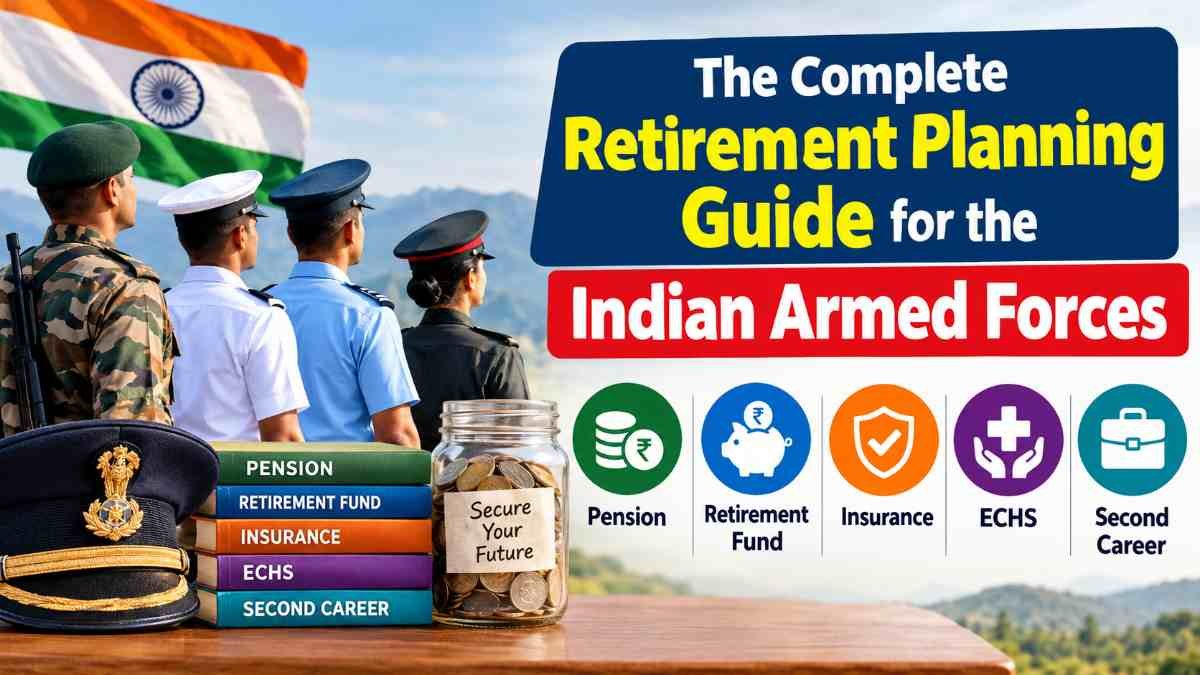
Retirement from the Indian Armed Forces is not simply the end of military service. For many personnel, it is the beginning of a completely different phase of life. A regular pension, retirement benefits, medical support, insurance and a second career can together provide financial stability, but only when they are planned properly. The biggest mistake is waiting until the final few months of service to think about money, documents and future employment. A good retirement plan should ideally start several years before retirement so that there is enough time to build savings, clear major liabilities and prepare the family for the change in monthly income.
For defence personnel, pension remains one of the most important pillars of post-retirement financial security. The Department of Ex-servicemen Welfare currently lists service pension, family pension, special family pension, liberalized family pension, disability pension and other pension categories under the applicable defence pension regulations. The department also continues to maintain and revise pension provisions and OROP-related orders for eligible defence pensioners.
| Retirement Planning Area | What to Prepare | Why It Matters |
|---|---|---|
| Pension | PPO, service records, bank details | Regular post-retirement income |
| Medical | ECHS membership and records | Long-term healthcare support |
| Financial Fund | Savings, investments, gratuity | Emergency and family needs |
Pension and Retirement Fund Need Separate Planning
Pension can provide regular income, but it should not be treated as the only source of retirement money. Retirement gratuity, leave encashment, insurance maturity and accumulated savings can create an important financial cushion. The actual benefits depend on rank, qualifying service, retirement type and applicable rules. Defence personnel should therefore carefully check their service records and pension documents before leaving service rather than discovering an error after retirement.
One Rank One Pension has also remained an important part of defence pension planning. The latest OROP revision currently available through the Department of Ex-servicemen Welfare relates to pension revision with effect from July 1, 2024. Pensioners should check the applicable tables and their individual pension records rather than relying on general figures circulating on social media.
Insurance and Emergency Savings Can Protect the Family
Insurance becomes even more important after retirement because regular military income stops changing in the same way as during active service. A retired person should review life insurance, health-related financial protection and existing liabilities before deciding how much money can be invested elsewhere. The aim should be to make sure that a major medical expense, home repair, education cost or family emergency does not force the retiree to break long-term investments.
A separate emergency fund is equally useful. Keeping several months of essential household expenses readily accessible can reduce pressure during unexpected situations. Retirement money should not all be placed into one investment product. A balanced approach can include safe savings, suitable fixed-income options and long-term investments according to the individual’s age, risk capacity and family responsibilities.
ECHS Is a Major Part of Retirement Security
Healthcare is one area where defence retirees have a major support system through the Ex-Servicemen Contributory Health Scheme. ECHS provides medical facilities to eligible ex-servicemen pensioners, family pensioners and eligible dependants through its network of polyclinics and empanelled healthcare facilities.
Retirement planning should therefore include ECHS membership, beneficiary details and relevant medical documents. The system continues to evolve, with official updates in 2026 covering hospital empanelment and revised rates applicable to ECHS healthcare organisations. Keeping beneficiary information updated can make it easier for the family to access services when they are actually needed.
Second Career Can Add Income and Purpose
For many ex-servicemen, retirement does not mean stopping work. Military discipline, leadership, technical skills, administration, security experience and the ability to work under pressure can be valuable in the civilian job market. Depending on qualification and experience, veterans can explore opportunities in security management, logistics, administration, training, transport, private industry, government-linked organisations and self-employment.
A second career should ideally be planned before retirement. Updating the resume, identifying transferable skills, completing useful certifications and building professional contacts can make the transition much smoother. The government also maintains reservation and welfare-related provisions for ex-servicemen, while individual recruitment rules determine eligibility for particular posts.
The Best Retirement Plan Is One That Covers the Whole Family
A strong retirement plan should not stop at pension calculation. The family should know where important documents are kept, how pension is received, how ECHS benefits are accessed and what insurance or investment arrangements are already in place. Nominees should also be reviewed whenever there is a major change in family circumstances.
Before retirement, personnel should make a practical checklist covering PPO and service records, bank account details, gratuity and leave benefits, insurance, ECHS, investments, loans, children’s education, housing and a possible second career. The purpose is simple: retirement should bring a change in routine, not a sudden financial crisis.
FAQ
When should defence personnel start retirement planning?
Ideally, retirement planning should begin several years before the actual retirement date. This provides enough time to build savings, manage loans, organise documents and prepare for a second career.
Is pension enough for a comfortable retired life?
Pension can be an important source of regular income, but expenses vary from family to family. Healthcare, education, housing and lifestyle costs make additional savings and retirement funds important.
Why is ECHS important after retirement?
ECHS provides healthcare support to eligible ex-servicemen pensioners, family pensioners and eligible dependants. Keeping ECHS membership and family details properly updated can make access to healthcare easier after retirement.